
Moving Back from the Brink
Pacific Northwest organizers join a global campaign to abolish all nukes and push for a city council resolution to start

“This world really is impossible to manage so long as we have nuclear weapons,” President Kennedy confided to a friend a day before his blockade speech: “It is really a terrible way to have to live in this world.”
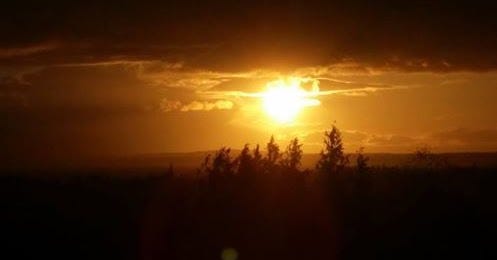
At 5:30 a.m. on July 16, 1945, a flash “brighter than a thousand suns” lit the Alamogordo desert in New Mexico. General Leslie Groves, the overseer of the Manhattan Project estimated the explosive force of Trinity, the first full scale test of the implosion-type atomic fission bomb, “in excess of the equivalent of 15,000 to 20,000 tons of TNT.”
Grove’s report continued to describe “a fireball brighter than several midday suns;” a stratospheric mushroom cloud over 41,000 feet; and an explosive force resulting in a crater 1,200 feet in diameter and shattering windows 125 miles away.
According to War Secretary Henry Stimson, President Truman was giddy, “tremendously pepped up,” confident and invigorated enough to call the annihilation of Hiroshima three weeks later to the sailors on the USS Augusta while returning from Potsdam “the greatest thing in history.”
Today, a mere lifetime and thousands of Trinities later, nine nuclear nations control the futures of billions of global inhabitants. The cataclysmic potential of more than 13,000 nuclear weapons in 2024, each with unimaginable destructive power, are but a single miscalculation, false flag attack or accident away from ravaging the planet.
Recently, longtime antinuclear activist, Dr. Helen Caldicott described the medical effects of a single 20-megaton bomb dropped on an American city, New York or maybe Boston:
A Russian 20-megaton bomb would enter at 20 times the speed of sound exploding with the heat of the sun, digging a hole three-quarters of a mile wide and 88 feet deep, converting all buildings, people and earth shot up into the air as a mushroom cloud. Twenty miles from the epicenter, all humans would be killed or lethally injured, some converted to charcoal statues. Winds of 500 mph turn people into missiles traveling at 100 mph. A massive conflagration would follow covering 300 square miles and the fires would coalesce across the nation.
As cities burn across the world, a massive cloud of toxic black smoke will elevate into the stratosphere blocking out the sun for ten years inducing a short ice age nuclear winter when all humans and most plants and animals will perish.
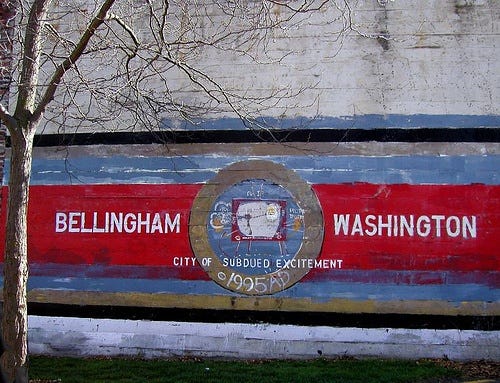
Closer to home, the Pacific Northwest is a major nuclear, strategically targeted region in any war, if only to include the 1,300 nuclear warheads at Kitsap Bangor Naval Base and submarine communications base, Naval Radio Station Jim Creek, near Oso, both within 73 and 58 miles, as eagles fly, from Bellingham, both listed as primary U.S. ground zeros for Russia’s crosshairs. Doing the cataclysmic math for a strike on Oso, the City of Subdued Excitement and most of Skagit County would be consumed in less than fifteen minutes in a mega-inferno, and finished off by shockwaves and Carl Sagan’s “witches brew of radioactive particles” raining down as fallout.
Those “lucky” enough to have survived will realize within minutes they are entirely on their own. No 9-1-1. No FEMA. Just struggling to self-survive.
Fortunately, individual and cultural psychic-numbing provides most of the post-Cold War populace with a much-needed coping mechanism to keep from being overwhelmed. Many of the rest of us remember all too well nuclear annihilation threats from U.S. presidents and Soviet leaders, the inefficacies of civil defense exercises and the Cuban Missile crisis, and most refuse to check out, just yet.
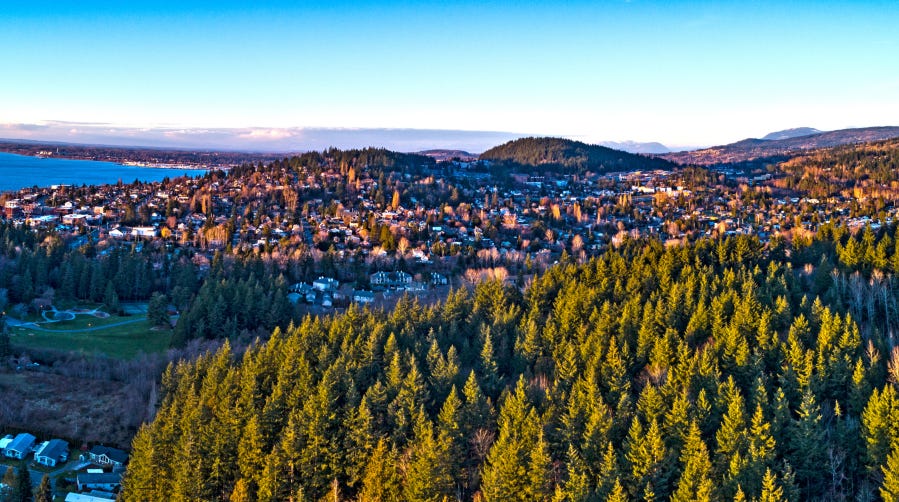
They know that nuclear weapons matter to people at the local level and campaign organizers hope our City Council will join this global effort to abolish every nuclear warhead by passing a resolution in support of the goals and provisions of the U.N. Treaty on the Prohibition of Nuclear Weapons (below), in effect a lasting legacy for Bellingham, to take the nuclear option off the table, for generations and billions of futures to come.
The author of Nuclear War: A Scenario, Annie Jacobsen, likely said it best,
With time, after a nuclear war, all present-day knowledge will be gone. Including the knowledge that the enemy was not North Korea, Russia, America, China, Iran, or anyone else vilified as a nation or group.
It was the nuclear weapons that were the enemy of us all. All along.
Ultimately, avoiding a nuclear war depends on the judgement of national leadership controlling the arsenals. Let’s hope a changemaker is listening.
Please email, write or call your council person or the entire council and urge them to join 80 other cities in urging the Federal Government to begin negotiations to lessen the threat of nuclear war.